
Environmental Effects on Driving a Car
January 29, 2009
We cannot avoid environmental conditions when we drive. Sometimes, conditions are favorable: a clear day with good visibility. Other times, challenging environmental conditions such as rain, fog and wind exist. Understanding how to properly handle these challenging conditions will make driving in them safer and less stressful.
Even a day filled with sunshine can present problems when driving. Too much light can make it difficult to see ahead. Wear sunglasses or use your sun visor. Always keep the lower edge of the sun visor pushed toward the windshield. Clean the inside of your windshield and all windows at least once per week. Sunshine on a dirty windshield creates glare.
Night driving requires adjustments too. The lack of light reduces detail and conceals hazards such as pedestrians, bicycles, stalled cars, and curves. It is more difficult to judge the speed and position of other vehicles. You must depend largely on your headlights, which will show only a relatively short and narrow path ahead. Headlights do not bend around corners; they will only illuminate what is directly in front of you. Highway lighting may be limited. Glare from roadway lights, business signs, and the headlights of oncoming vehicles may impair your visibility.
Other conditions that can greatly affect visibility are fog, haze, smoke and mist. Be especially careful of patches of fog in valleys and low-lying areas. It is best not to drive in fog or smoke. If you must, slow down, turn on your low beam headlights, and be ready for a fast stop. Be alert for slow-moving or stopped traffic. Check your rearview mirrors frequently for vehicles that are approaching quickly from the rear. Use windshield wipers in heavy fog. If the fog or smoke becomes so thick that you cannot see well enough to keep driving, pull off the road until conditions improve. Pull over as far to the right as possible, off the main travel portion of the roadway. Leave your parking lights on and activate your hazard lights.
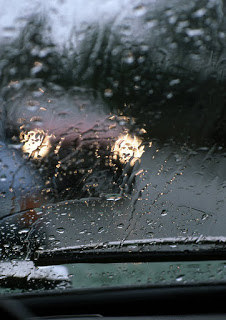
During rainy conditions, wet roads will increase stopping distance. Roads are most slippery just after it begins to rain because the rain mixes with oil dropped from cars onto the road, creating a very slick surface.
When you are driving in the rain, slow down. Driving too fast in the rain makes hydroplaning more likely. When a car hydroplanes, the tires ride on a thin film of water instead of on the road. When this happens, you can easily lose control and skid. Your vehicle can hydroplane in as little as 1/16 of an inch of water. If the tread on your tires is worn, your vehicle is more likely to hydroplane. Besides slowing down, you can also reduce your chances of hydroplaning by making sure your tires have the right air pressure and good tread. If your vehicle hydroplanes, ease your foot off the gas and allow your vehicle to slow down until your tires gain traction with the road.