
Florida Motorcycle Handbook: Wear the Right Gear
4. Preparing to Ride
When you ride, your gear is "right" if it protects you. In any crash, you have a far better chance of avoiding serious injury if you wear:
- An approved helmet.
- Face or eye protection.
- Protective clothing.
4.2.1 - Helmets
Helmet Use
Crashes are not rare events - particularly among beginning riders. And one out of every five motorcycle crashes results in head or neck injuries. Head injuries are just as severe as neck injuries - and far more common. Crash analyses show that head and neck injuries account for a majority of serious and fatal injuries to motorcyclists. Research also shows that, with few exceptions, head and neck injuries are reduced by the proper wearing of an approved helmet.
Some riders don't wear helmets because they think helmets will limit their view to the sides. Others wear helmets only on long trips or when riding at high speeds. Here are some facts to consider:
- An approved helmet lets you see as far to the sides as necessary. A study of more than 900 motorcycle crashes, where 40% of the riders wore helmets, did not find even one case in which a helmet kept a rider from spotting danger.
- Most crashes happen on short trips (less than five miles long), just a few minutes after starting out.
- Most riders are riding slower than 30 mph when a crash occurs. At these speeds, helmets can cut both the number and the severity of head injuries by half.
No matter what the speed, helmeted riders are three times more likely to survive head injuries than those not wearing helmets at the time of the crash.
HELMET SELECTION
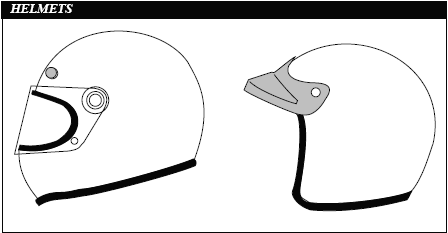
There are two primary types of helmets, providing two different levels of coverage: three-quarter and full face. Whichever style you choose, you can get the most protection by making sure that the helmet:
- Meets U.S. Department of Transportation (DOT) and state standards. Helmets with a label from the Snell Memorial Foundation give you an added assurance of quality.
- Fits snugly, all the way around.
- Has no obvious defects such as cracks, loose padding or frayed straps. Whatever helmet you decide on, keep it securely fastened on your head when you ride. Otherwise, if you are involved in a crash, it's likely to fly off your head before it gets a chance to protect you.
4.2.2 - EYE AND FACE PROTECTION
plastic shatter-resistant faceshield can help protect your whole face in a crash. It also protects you from wind, dust, dirt, rain, insects and pebbles thrown up from cars ahead. These problems are distracting and can be painful. If you have to deal with them, you can't devote your full attention to the road. Goggles protect your eyes, though they won't protect the rest of your face like a faceshield does. A windshield is not a substitute for a faceshield or goggles. Most windshields will not protect your eyes from the wind.Neither will eyeglasses or sunglasses. Glasses won't keep your eyes from watering, and they might blow off when you turn your head while riding.
To be effective, eye or faceshield protection must:
- Be free of scratches.
- Be resistant to penetration.
- Give a clear view to either side.
- Fasten securely, so it does not blow off.
- Permit air to pass through, to reduce fogging.
- Permit enough room for eyeglasses or sunglasses, if needed. Tinted eye protection should not be worn at night or any other time when little light is available.
4.2.3 - CLOTHING
The right clothing protects you in a collision. It also provides comfort, as well as protection from heat, cold, debris and hot and moving parts of the motorcycle.
- Jacket and pants should cover arms and legs completely. They should fit snugly enough to keep from flapping in the wind, yet loosely enough to move freely. Leather offers the most protection. Sturdy synthetic material provides a lot of protection as well. Wear a jacket even in warm weather to prevent dehydration. Many are designed to protect without getting you overheated, even on summer days.
- Boots or shoes should be high and sturdy enough to cover your ankles and give them support. Soles should be made of hard, durable, slip-resistant material. Keep heels short so they do not catch on rough surfaces. Tuck in laces so they won't catch on your motorcycle.
- Gloves allow a better grip and help protect your hands in a crash. Your gloves should be made of leather or similar durable material.
In cold or wet weather, your clothes should keep you warm and dry, as well as protect you from injury. You cannot control a motorcycle well if you are numb. Riding for long periods in cold weather can cause severe chill and fatigue. A winter jacket should resist wind and fit snugly at the neck, wrists and waist. Good-quality rainsuits designed for motorcycle riding resist tearing apart or ballooning up at high speeds.
Check out our Customer Reviews!